
 9640056766
 Manisha Diabetes and Endocrine Centre, Danavayapeta, Rajahmundry, Andhra Pradesh - 533101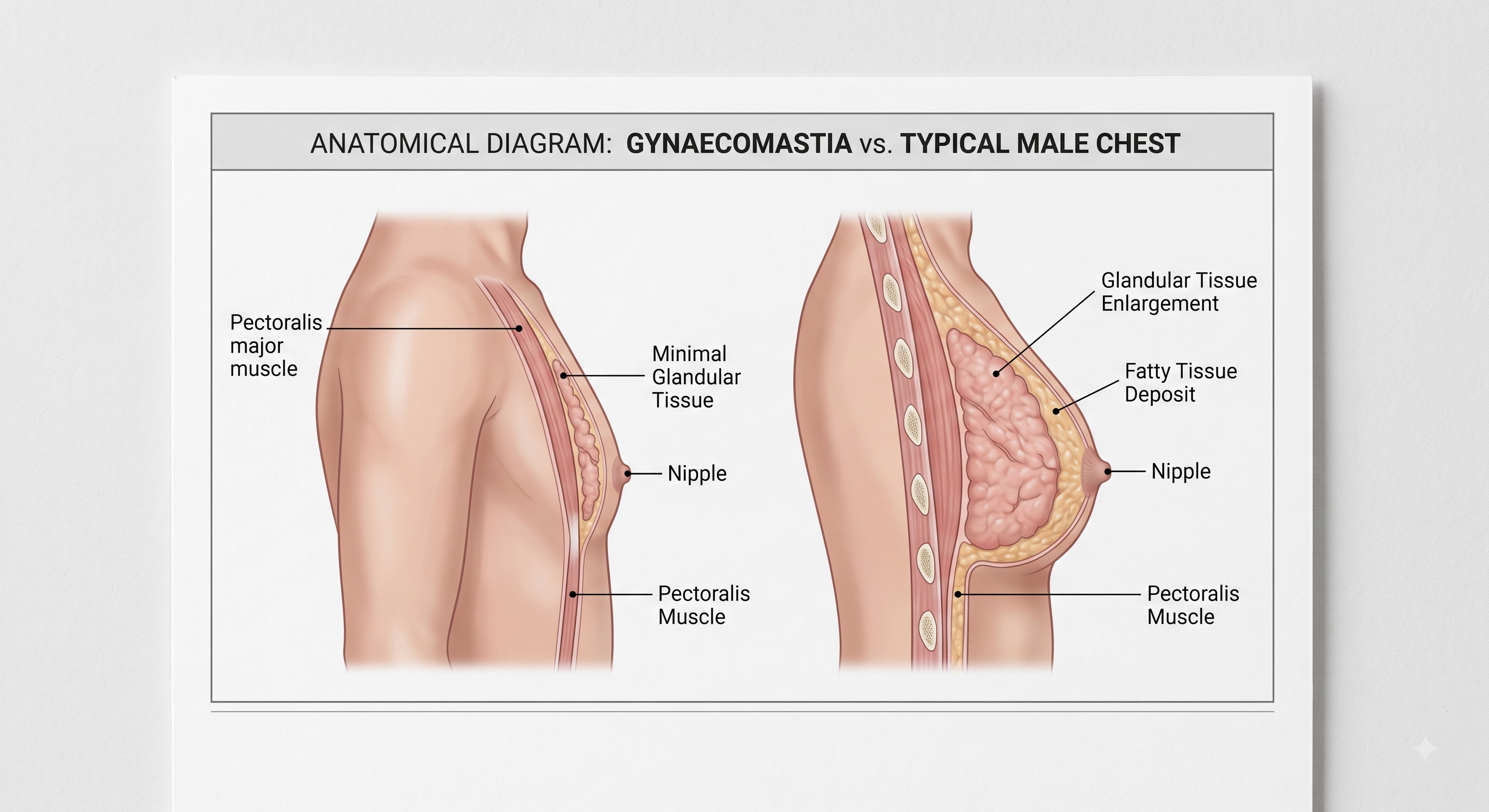
Overview
Gynaecomastia is an enlargement of the glandular breast tissue in males. It can affect one or both breasts and is often caused by an imbalance of the hormones estrogen and testosterone.
Signs to Watch For
- Swollen breast gland tissue
- Breast tenderness or sensitivity
- Nipple discharge (rarely)
Causes
Normal hormonal changes (during infancy, puberty, or aging), certain medications, anabolic steroids, health conditions that affect hormones (like hypogonadism or hyperthyroidism), and obesity.
Diagnosis
Diagnosis includes a physical exam to differentiate glandular tissue from fat (pseudogynecomastia), followed by blood tests to check hormone levels.
Treatment Options
Many cases resolve on their own, especially during puberty. If persistent or causing distress, medical intervention is available.
- Observation and reassurance (especially in teens)
- Medications targeting hormone receptors
- Treatment of underlying conditions (like hypogonadism)
- Referral for surgery in severe, long-standing cases
frequently asked questions
No, true gynaecomastia involves the enlargement of glandular tissue. Enlargement purely from fat is called pseudogynecomastia. An examination can tell the difference.
Pubertal gynaecomastia often goes away without treatment within 6 months to 2 years. If it persists longer, medical evaluation is recommended.

 Emergency Contact: 9640056766